Buying Guides12 min read
Search VIN for Accidents: How to Find Crash History
By Carfax Vin Check team · Automative Writer
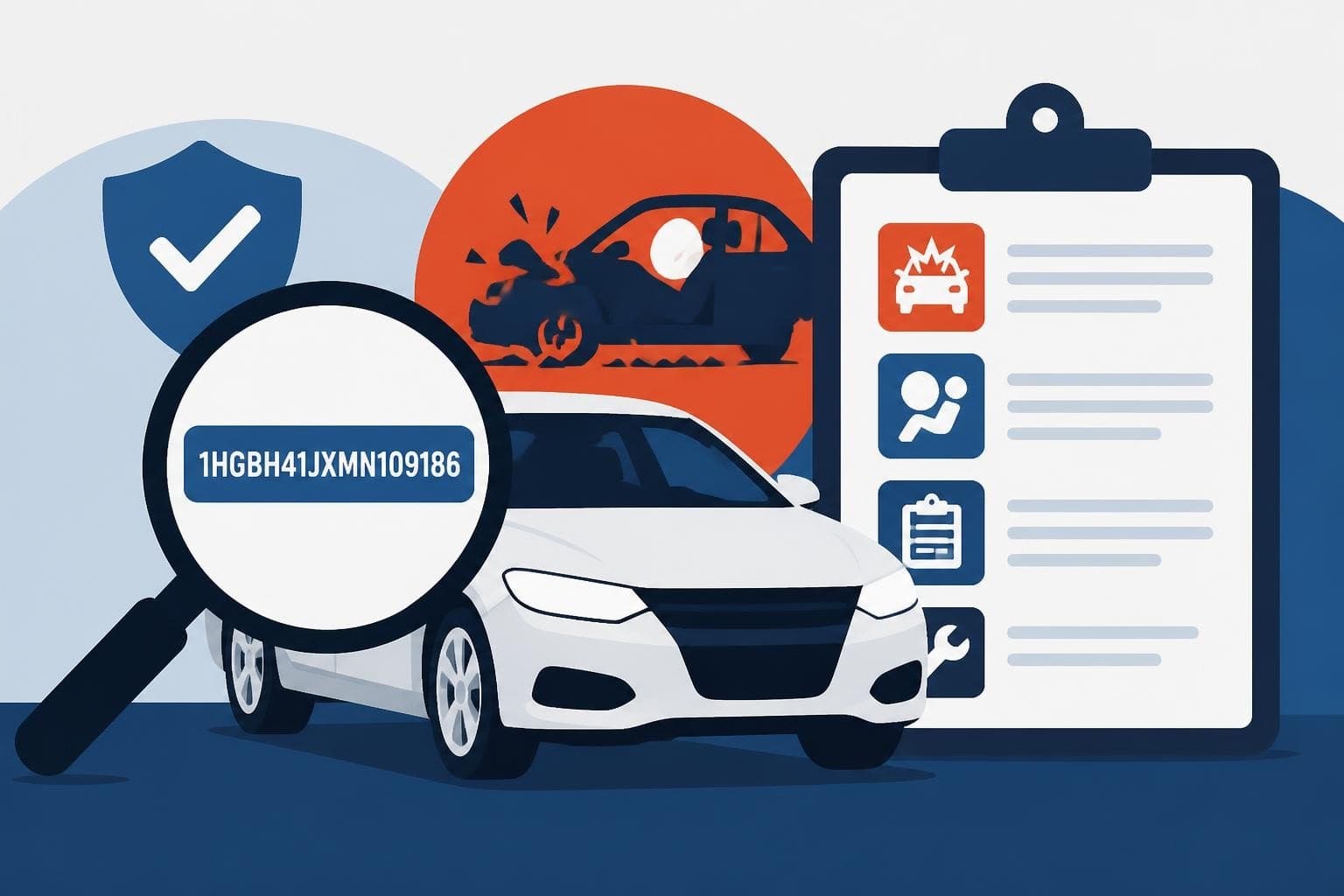
When you're shopping for a used car, the worst surprise comes months after you buy it, when hidden accident damage turns into expensive repairs. The vehicle identification number gives you a way to check the car's past before you hand over your money. Every car on the road has a unique 17-character VIN stamped on the dashboard and printed on its title, and that number unlocks a detailed record of crashes, repairs, and damage the seller might not mention.
Why you need to search VIN for accidents
Most private sellers don't lie outright, but they conveniently forget to mention the fender-bender in 2023 or the hail damage from two summers ago. Some professional flippers actively hide crash history by making cheap cosmetic repairs and skipping insurance claims. You can't spot frame damage or replaced airbags just by kicking the tires.
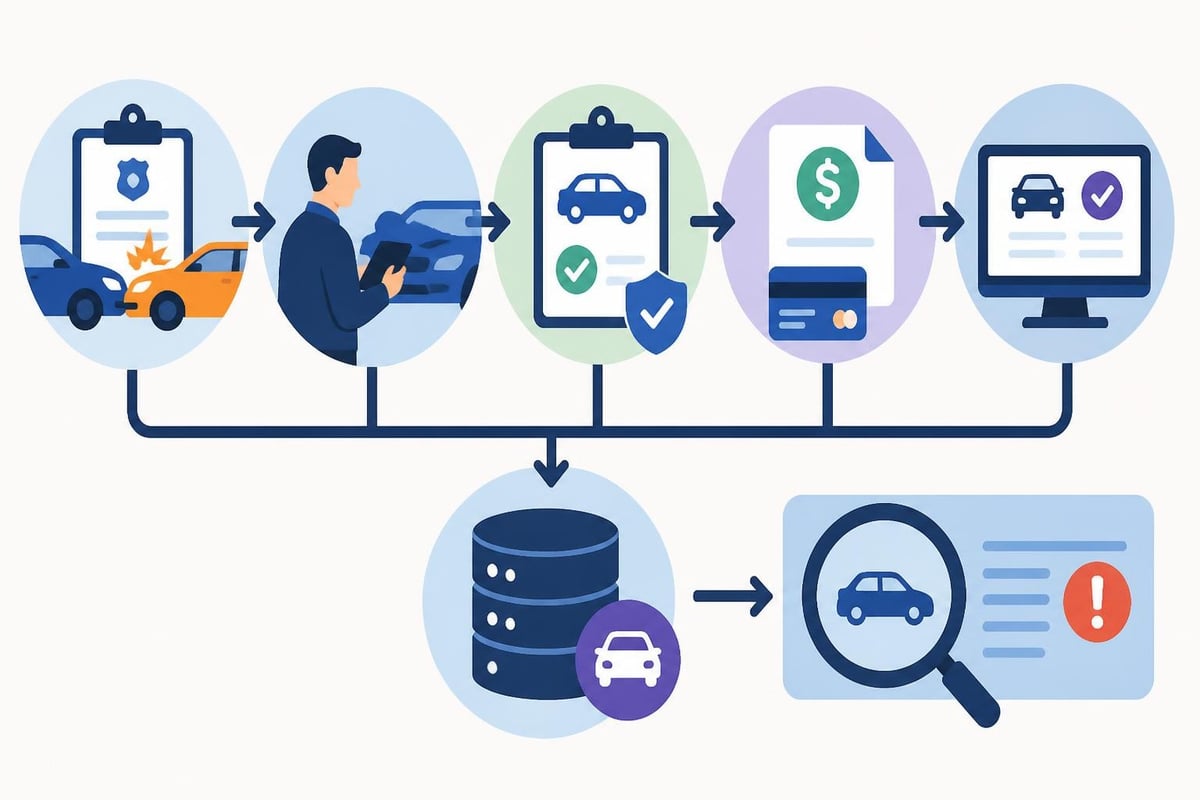
A VIN search pulls data from insurance companies, repair shops, and police reports. Here's what you typically find:
- Date and location of each accident
- Type of damage (front-end collision, rear impact, side damage)
- Severity indicators (airbag deployment, structural damage, total loss)
- Insurance claim amounts when available
- Whether the car was towed from the scene
When you search VIN for accidents, you're not just looking for deal-breakers. Even minor unreported damage tells you something important about how the previous owner treated the car and whether the asking price makes sense.
What shows up in accident records
Not every fender-bender appears in a VIN history report. The data comes from sources that file formal records, so minor parking-lot scrapes that the owner paid to fix out-of-pocket won't show up. Insurance claims create the most reliable paper trail because companies track every dollar they pay.
Police-reported crashes
If someone called the police to the scene, that crash almost always appears in the vehicle's permanent record. Most states require officers to file detailed collision reports that include the VIN, damage description, and fault determination. These reports feed into databases that Carfax and similar services aggregate. California Highway Patrol's crash report system demonstrates how states handle this documentation differently.
Insurance claims and total losses
Insurance companies report claims to centralized databases. When a car suffers enough damage that repairs cost more than about 70-80% of its value, insurers declare it a total loss and issue a salvage title. That salvage brand sticks with the car forever, even if someone rebuilds it and gets a rebuilt title later.
 Damage Level
Typical Insurance Action
What Appears in VIN Search
Minor (under $1,000)
Often unreported
May not appear
Moderate ($1,000-$5,000)
Claim filed, repaired
Accident record, damage type
Major ($5,000-$10,000)
Claim filed, extensive repairs
Detailed damage, possibly structural
Severe (exceeds value)
Total loss declared
Salvage/total loss brand
Body shop and parts records
Repair facilities that participate in insurance networks report the work they do. When a shop replaces a bumper, quarter panel, or airbag, that part replacement often gets logged. These records help verify whether reported damage was properly repaired and whether the car used OEM parts or cheaper alternatives.
How to search VIN for accidents step by step
The VIN is your starting point. You'll find it in several places on the car: the lower corner of the windshield on the driver's side, the driver's door jamb sticker, and printed on the title and registration. Write down all 17 characters carefully, because even one wrong digit pulls up the wrong car's history.
Verify the VIN first
Before you pay for a history report, make sure the VIN is valid and matches the car in front of you. A free VIN decoder tells you the year, make, model, body style, and engine the manufacturer assigned to that number. If the VIN decodes to a 2018 Honda Civic but you're looking at a 2019 Accord, someone swapped VIN plates or gave you the wrong number.
Common VIN mistakes:
- Confusing the number 0 with the letter O
- Mixing up the number 1 with the letter I
- Reading the eighth character wrong (the check digit that validates the VIN)
- Copying a partial VIN from an ad instead of the full 17 digits
Choose a vehicle history provider
Several companies sell VIN history reports, and they don't all pull from identical databases. Carfax remains the most widely recognized name because dealers use it and it has strong insurance-company relationships. AutoCheck (owned by Experian) uses different sources and sometimes shows accidents Carfax missed, or vice versa.
The National Motor Vehicle Title Information System (NMVTIS) provides federally mandated data about title brands, junkyards, and total losses. It costs less than commercial reports but shows less detail about accidents and doesn't include service records or ownership changes beyond title transfers.
Read the accident section carefully
When you search VIN for accidents and get your report, don't just count the number of incidents. Look at the details. A 2022 accident described as "minor damage reported, left rear" with a repair estimate under $1,500 matters a lot less than "structural damage, front end, airbags deployed, towed from scene."
Red flags in accident descriptions:
- Any mention of frame or structural damage
- Airbag deployment (expensive to repair correctly)
- Multiple accidents in the same area (suggests previous repairs failed)
- Accidents within months of each other (possibly a careless owner)
- Total loss or salvage designation
Pay attention to the date. An accident from 2015 on a 2014 car means it's lived most of its life post-crash. Recent accidents matter more when evaluating current condition, but old damage can hide problems that show up later.

What accident history means for your decision
Finding accidents doesn't automatically mean you walk away. Context matters. A single minor rear-end collision with professional repairs documented in the service records might not affect the car's reliability or safety. Major structural damage or a salvage title changes the calculation completely.
Minor accidents you can probably live with
Most used cars over five years old have been in some kind of incident. Door dings, parking-lot bumps, and low-speed fender-benders that got proper repairs rarely cause long-term problems. If the accident report shows less than $2,000 in damage, no airbag deployment, and the affected panels were repaired or replaced, you're mainly looking at cosmetic history.
Questions to ask when you find minor damage:
- Was it repaired at a certified body shop or a backyard operation?
- Do the repair dates match up with the accident dates?
- Does the current condition match what should result from professional work?
- Is the asking price adjusted to reflect the accident history?
You can use even minor accident history as negotiating leverage. A car with a clean history commands top dollar. One accident drops the value 10-15% in most cases, even if repairs were perfect.
Major damage you should worry about
Structural damage changes how a car performs in future crashes. When the frame or unibody structure gets bent, even professional straightening rarely restores original crash-test performance. The IIHS crash tests measure how well vehicles protect occupants in collisions, but those ratings assume the structure hasn't been compromised by previous damage.
Damage Type Impact on Safety Impact on Value Recommendation Cosmetic only None 5-10% reduction Negotiate discount Moderate (no airbags) Minimal if repaired well 15-20% reduction Inspect repairs carefully Airbag deployment Depends on replacement quality 20-30% reduction Consider walking away Structural/frame Significant 30-50% reduction Walk away Salvage/total loss Severe 50-70% reduction Avoid unless expert buyerConsumer Reports' used-car buying guide recommends pairing VIN history checks with pre-purchase inspections specifically because accident reports don't tell you whether repairs were done right.
Beyond the VIN search: verification steps
A history report shows what got reported, but not everything gets reported. You need to verify the information and look for signs that something got hidden. Professional flippers know how to minimize paper trails by using cash for repairs and avoiding insurance claims.
Physical inspection points
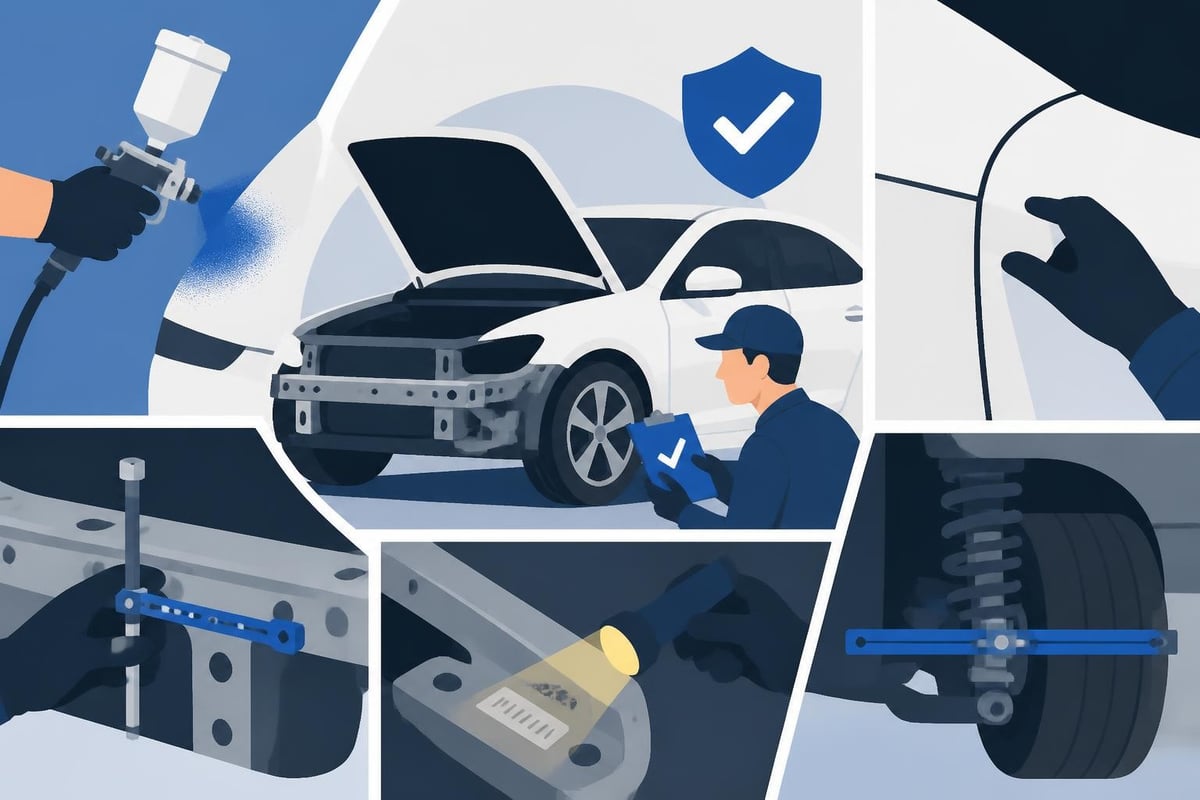
Stand back and look at the car from each corner. Paint that doesn't quite match between panels suggests replacement or refinishing. Check the gaps between body panels-uneven spacing means something got bent or poorly reinstalled. Open the hood and look for overspray on parts that shouldn't have been near a paint booth.
Places accident damage leaves clues:
- Mismatched paint color or texture between panels
- Fresh undercoating covering recent welding
- New bolts next to old, rusty ones on structural parts
- Wrinkled or rippled metal under fresh paint
- Airbag covers with different colors or textures than the dashboard
The VIN appears on major body parts and the engine. If someone replaced a fender after an accident, the replacement part might have a different VIN stamped on it, or no VIN at all. Check the door jambs, under the hood, and on the core support.
Independent mechanical inspection
A good mechanic spots things you'll miss. They can put the car on a lift, check the frame for straightness with measuring tools, and look for repair work that wasn't documented. The $150-200 you spend on a pre-purchase inspection catches problems worth thousands.
When you search VIN for accidents and find damage, tell the inspector exactly what the report says and ask them to verify the repair quality. They can measure frame dimensions, check suspension alignment, and test airbag systems to confirm everything works as designed.
Privacy and legal limits of VIN searches
Vehicle history exists in a gray area between public and private information. The VIN itself doesn't contain personal data, but the records tied to it include insurance claims, police reports, and sometimes owner names. The Driver's Privacy Protection Act limits who can access motor vehicle records and for what purposes, though vehicle history checks for potential purchase fall under permitted uses.
What you can and can't learn
Commercial vehicle history reports show accident details, title brands, odometer readings, and service records. They typically don't show current owner names, addresses, or insurance information unless you're law enforcement or have another legally permitted reason. If you want accident specifics beyond what appears in a VIN report, you can often request the actual police report from the department that responded, though processing takes time and usually costs a small fee.
Limitations of reported data
Not every state requires the same accident reporting thresholds. Some states mandate police reports only for crashes over $1,000 in damage, while others set the bar at $2,500 or higher. Minor accidents below those thresholds might never create a formal record. Private-party crashes with cash settlements leave no paper trail at all.
Insurance companies share data voluntarily through industry databases, but timing varies. An accident from last month might not appear yet because the claim hasn't closed or the data hasn't been transmitted. When you search VIN for accidents, you see historical records, not real-time information.
Making your decision with accident data
Once you have the accident history, you need to decide whether to buy, negotiate, or walk away. The answer depends on your risk tolerance, the car's price relative to clean examples, and how hard it is to find another one like it.
Decision framework:
- No accidents or one minor incident with good repairs: Proceed with normal inspection and negotiation
- Multiple minor accidents or one moderate accident: Reduce your offer by 20-30% and get a thorough pre-purchase inspection
- Major structural damage or airbag deployment: Walk away unless price reflects significant discount (40%+) and you accept higher risk
- Salvage or rebuilt title: Avoid unless you're an experienced buyer who knows how to evaluate rebuilt cars
Remember that you're buying a used car in 2026, so even accidents from five years ago still matter. The repairs have had time to show their quality (or lack of it). If someone did substandard work in 2021, you'll see rust, misalignment, or mechanical problems now.
Different buyers weight accident history differently. A commuter car you plan to drive into the ground can tolerate more accident history than a vehicle you hope to sell in three years. Luxury and performance cars lose more value from accidents than basic economy models. Sports cars and German luxury sedans with accident history become nearly impossible to resell later.
Combining VIN searches with other research
A thorough buyer checks more than just accidents. You want the complete picture: title brands, odometer history, ownership changes, service records, and open recalls. Each piece of information confirms or contradicts what the seller tells you.
The same VIN that shows accidents also reveals whether the car has a clean title or carries a salvage, flood, or hail-damage brand. You can check for open safety recalls separately, since manufacturers sometimes issue campaigns years after a car was built. Odometer readings from inspections and registrations help spot rollbacks or unusual mileage jumps that suggest the car sat damaged somewhere.
Combine VIN history with model-year research. Look up common problems for that specific year and model, check for technical service bulletins the manufacturer issued, and read owner forums where people discuss chronic failures. A car with accident history and a reputation for electrical problems carries more risk than one with the same accident but rock-solid reliability otherwise.
Costs and where to get reports
A single Carfax report costs around $40 if you buy directly from Carfax, which makes sense if you're looking at one car. If you're shopping seriously and want to check multiple vehicles, the math changes. For buyers checking three or more cars, see our pricing page where bulk packs bring the cost per report down significantly.
Some online listings include free vehicle history reports, but be skeptical. Dealers sometimes provide partial reports that show only favorable information or use providers with incomplete databases. Always verify with your own report from a major provider when you're serious about buying.
Alternatives like AutoCheck cost less than Carfax and occasionally show different accident records because they pull from different sources. The NMVTIS reports run $5-10 and give you title brands and total-loss records but skip most accident details and service history. For a complete picture, you want data from insurance claims, which Carfax and similar commercial providers aggregate better than government systems.
After you buy: ongoing monitoring
Your responsibility to search VIN for accidents doesn't end when you buy the car. If you're keeping it for years, periodic checks confirm nothing new appeared (sometimes delayed reports show up months later). More importantly, you want a fresh report when you sell, both to show prospective buyers and to verify no one incorrectly added accident records to your car's history.
Mistakes happen. Insurance companies sometimes enter the wrong VIN on a claim, sticking someone else's accident on your car's record. Title clerks transpose digits when entering data. If you find an accident on your VIN report that you know didn't happen to your car, you can dispute it with the reporting agency, though fixing the error takes documentation and persistence.
Keep your own records of any accidents or damage that occur while you own the car. Save repair invoices, photos of damage, and insurance correspondence. When you sell, a buyer who finds an accident on the VIN report but sees you have complete documentation of professional repairs will pay closer to clean-title prices than if you have no explanation.
Understanding how to properly search VIN for accidents, interpret what you find, and verify the information protects you from expensive mistakes. It also gives you confidence to recognize when accident history doesn't matter and when it's a deal-breaker. The VIN tells the car's story, but you need to know how to read it.
Checking accident history before you buy a used car isn't optional anymore-it's the standard first step for smart buyers. When you search VIN for accidents, you uncover damage the seller might not disclose and avoid cars with hidden structural problems. Carfax Vin Check gives you access to detailed Carfax reports covering accidents, title brands, service records, and more for US and Canadian vehicles, with reports arriving in about a minute and credits that never expire.
Check the car before you buy it
The full Carfax report for $7.99, or $3.50 each in a 20-pack.