Buying Guides13 min read
Carfax Mileage Check: How to Spot Odometer Fraud
By Carfax Vin Check team · Automative Writer
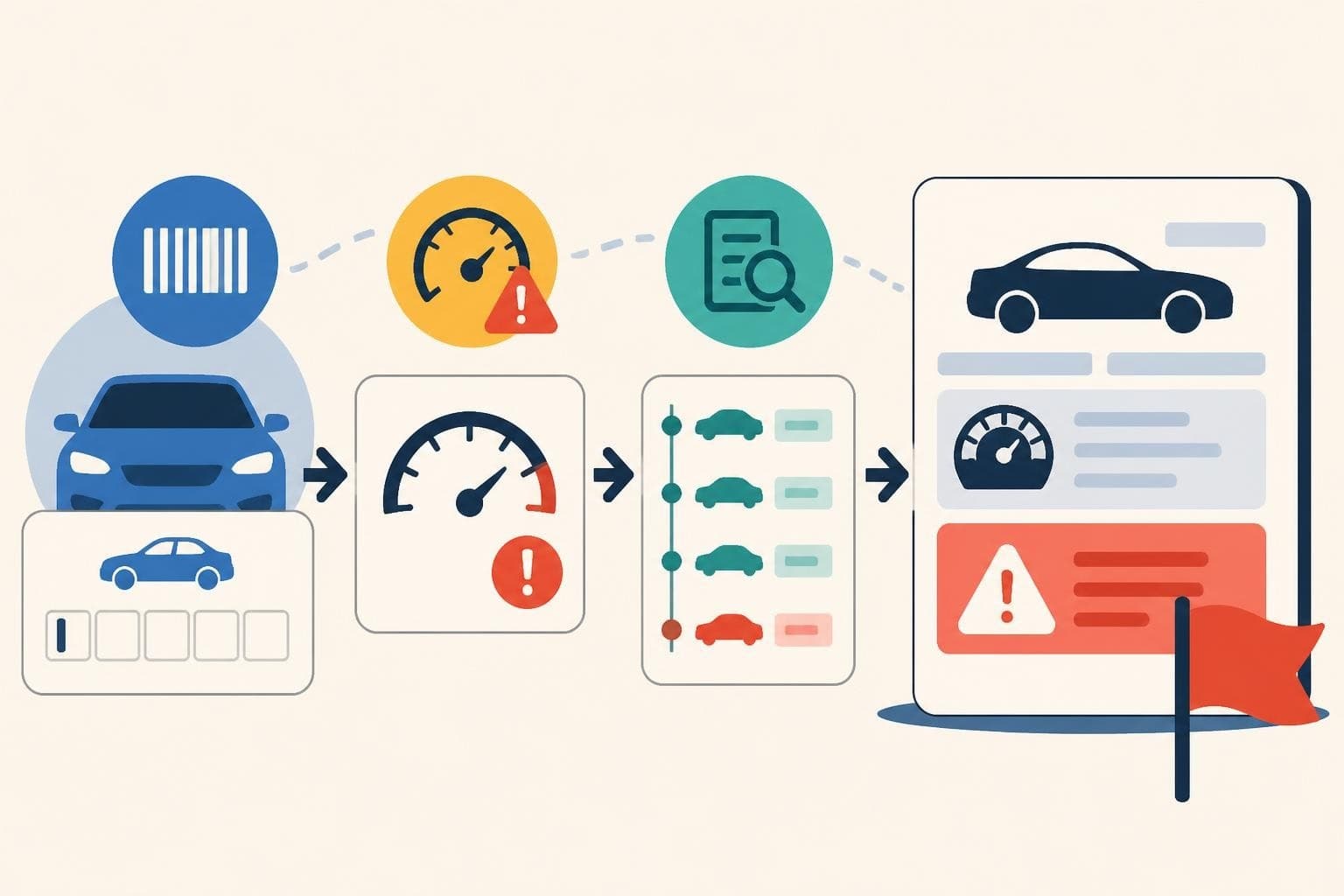
When you're looking at a used car with 68,000 miles on the odometer, you want to trust that number. But odometer fraud costs American car buyers more than a billion dollars every year, according to federal enforcement agencies. A carfax mileage check gives you the documented odometer history from state DMV records, service visits, inspections, and other sources, so you can see whether the displayed mileage matches reality. One inconsistent reading can signal tampering, rollback, or a simple data entry error that still matters when you're negotiating price.
Why odometer readings matter more than you think
Mileage directly affects a vehicle's market value, mechanical condition, and remaining useful life. Every 10,000 miles typically drops resale value by several hundred dollars, which is why dishonest sellers target the odometer.
Higher mileage means more wear on the engine, transmission, suspension, and every other moving part. A car with 150,000 genuine miles needs different maintenance and inspection than one with 50,000 miles, even if they're the same year and model.
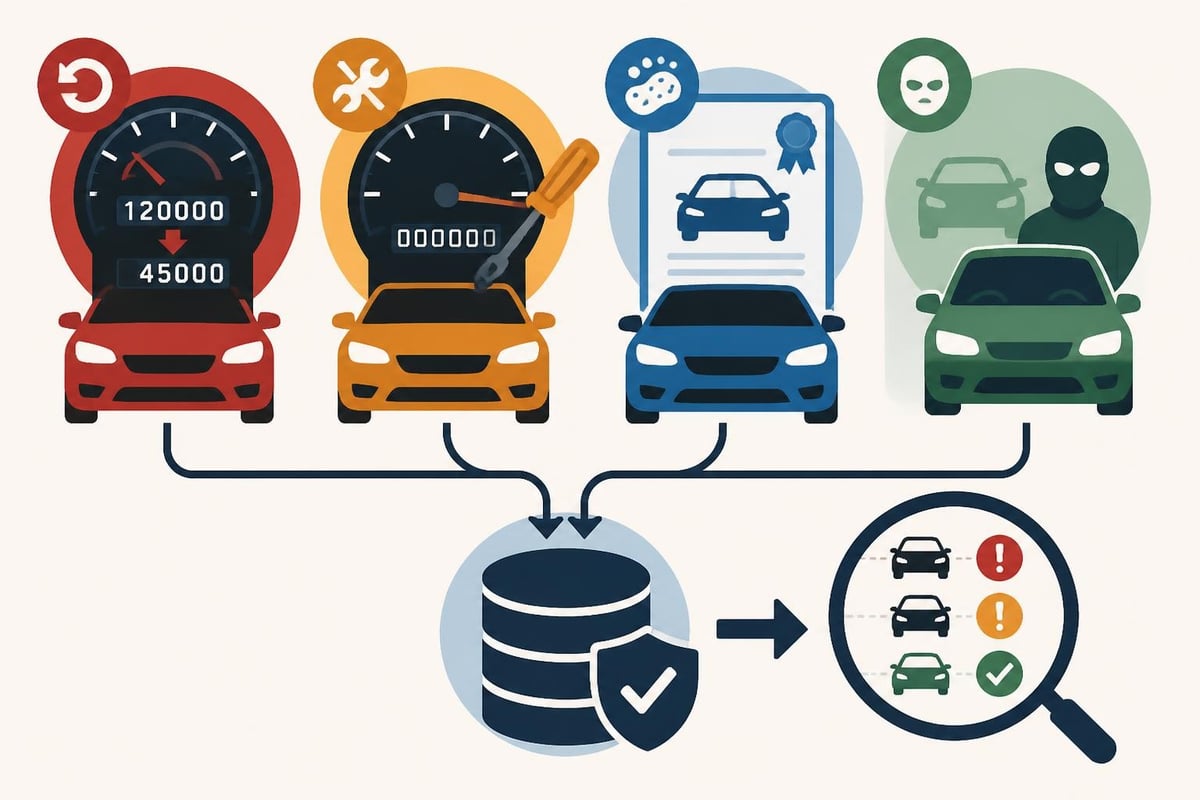
Odometer fraud takes several forms:
- Rollback: Physically or electronically resetting the odometer to a lower number
- Tampering: Disconnecting the odometer cable or manipulating digital systems
- Title washing: Moving a high-mileage vehicle across state lines to obscure records
- VIN cloning: Swapping identity documents from a low-mileage car onto a high-mileage one
The U.S. Department of Justice prosecutes odometer fraud as a federal crime, which tells you how seriously authorities take this issue. Penalties can reach six figures and include jail time.
What a carfax mileage check actually shows you
A vehicle history report compiles odometer readings from dozens of sources, creating a timeline that reveals problems. Each entry includes the date, mileage, and source of the reading.
Data sources for mileage verification
State DMV title and registration records provide the official mileage at ownership transfers and annual renewals. These are the most reliable baseline readings because they're government records.
Service and repair shops report mileage when they perform oil changes, inspections, tire rotations, and other work. A car with regular maintenance generates dozens of mileage checkpoints over its lifetime.
Inspection stations in states that require emissions or safety inspections add another verification layer. Some states inspect annually, others every two years.
Insurance claims, auction records, and even some rental car companies contribute mileage data when vehicles pass through their systems.
Data Source Frequency Reliability DMV title transfers At each sale Very high Annual registration Yearly High Service records Varies widely Moderate to high State inspections Annual/biennial High Insurance claims When filed ModerateThe federal NMVTIS database centralizes title and brand information from participating states, which helps catch title washing schemes where sellers move cars to states with less stringent reporting.
How to read the mileage timeline
Start at the top of the report and work down chronologically. You're looking for three things: consistent increases, reasonable rates of accumulation, and any backwards jumps.
Normal mileage increases between 10,000 and 15,000 miles per year for average drivers. Less than 5,000 suggests limited use, storage, or possible disconnection. More than 20,000 indicates heavy driving, fleet use, or ride-share service.
Red flags in the mileage section:
- Any decrease in odometer reading between dates
- A sudden jump to "exempt" or "not actual mileage" status
- Long gaps without any readings (suggests hidden history)
- Unusually round numbers at every reading (55,000, 60,000, 65,000)
- Inconsistent rate of accumulation (2,000 miles one year, 30,000 the next, then back to 2,000)
Some older vehicles legally qualify for exempt status once they exceed a certain age or mileage threshold, but this varies by state. If a 2020 model shows exempt status, that's suspicious.
Common mileage discrepancies and what they mean
Not every discrepancy indicates fraud. Data entry errors happen, especially when technicians manually input odometer readings into shop management systems.
A single reading that's 10 miles off could be a typo. If the sequence shows 45,230, then 54,230, then 55,240, that middle number is likely 45,230 entered incorrectly. The pattern before and after makes sense.
Genuine errors versus intentional fraud:
- Single outlier: One reading breaks the pattern, but others confirm the trend
- Transposed digits: 78,542 becomes 78,452 in one record
- Decimal errors: 98.5 thousand entered as 985 thousand
- Unit confusion: Kilometers converted incorrectly to miles
Intentional rollback creates a pattern where multiple subsequent readings support the lower figure. If the odometer shows 72,000 at a service visit, then 68,000 at title transfer six months later, then 69,500 at the next oil change, someone rolled it back between that service visit and the title transfer.
According to Consumer Reports guidance on used car buying, verifying odometer accuracy should happen before you negotiate price, since mileage significantly impacts value.
How digital odometers changed the fraud game
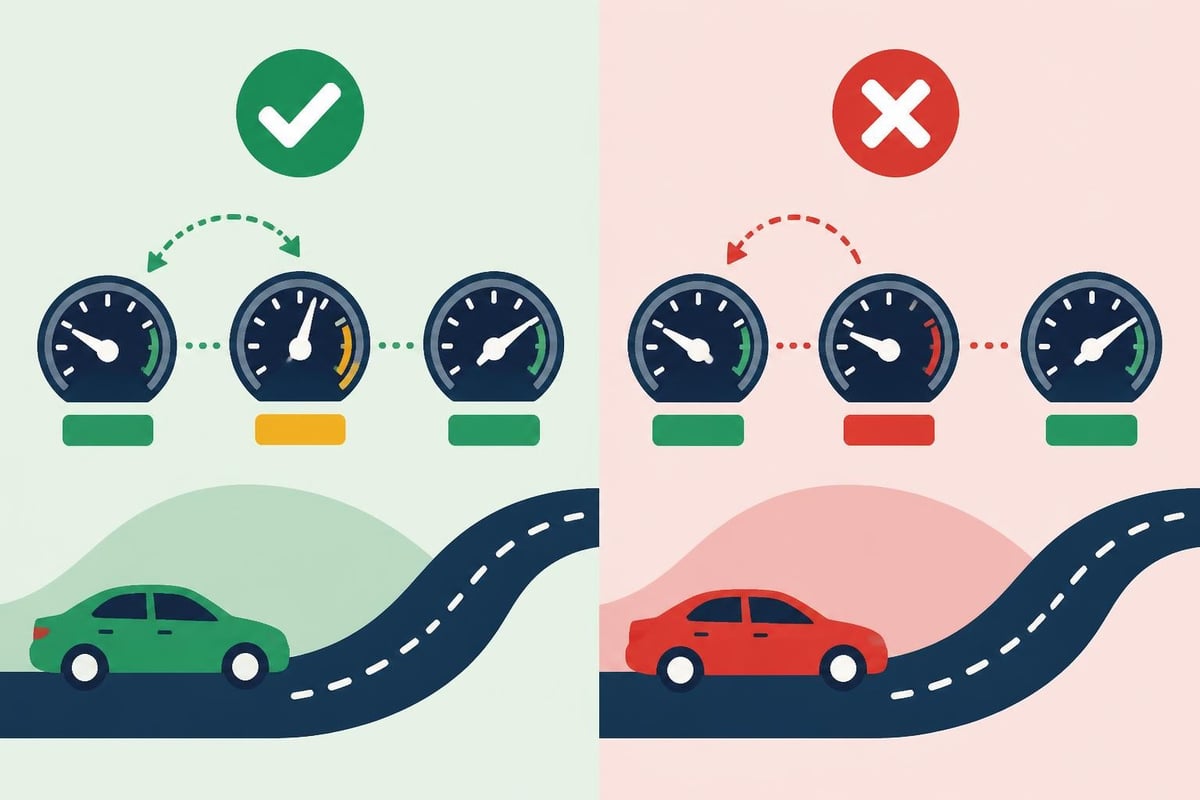
Older mechanical odometers with rolling number wheels were relatively easy to roll back with hand tools. Digital odometers in modern vehicles seemed tamper-proof at first, but technology cuts both ways.
Electronic manipulation techniques
Scan tools and programming devices can access a vehicle's onboard computer and rewrite the stored mileage value. These tools originally existed for legitimate purposes (replacing faulty instrument clusters, for example), but they're available to anyone with a few hundred dollars and an internet connection.
Mileage correction services advertise openly online, claiming to help owners fix "incorrect" readings. Some are legitimate shops correcting genuine errors after computer replacements. Others serve the fraud market.
Multiple computers in modern vehicles store mileage data. The instrument cluster displays it, but the engine control module, transmission computer, and other systems also log mileage. Sophisticated fraud involves rewriting all these modules so diagnostic scans won't reveal discrepancies. Amateur fraud only changes the display, leaving evidence in other modules.
A thorough pre-purchase inspection at a qualified shop includes scanning these additional modules to compare their stored mileage against the odometer display. If they don't match, someone tampered with the system.
State-by-state variations in mileage reporting
Not all states require annual odometer disclosure. Some only capture mileage at title transfers, which might happen once every five or ten years if the same owner keeps the car.
Registration and inspection requirements
States with annual registration renewals that include odometer readings provide better documentation. California, Texas, and New York have strong reporting systems that feed data into history databases regularly.
States without annual safety or emissions inspections generate fewer mileage checkpoints. If a car spent its first ten years in one of these states, the history report might show large gaps between readings.
This is where service records become critical. A car with sparse official records but extensive service history from a dealer network or national chain still provides verification. If you're examining a vehicle from a low-reporting state, ask the seller for service receipts to fill the gaps. You can also check the VIN decoder to confirm basic vehicle information matches what the seller claims.
Title washing and jurisdiction shopping
Criminals move high-mileage vehicles to states with weaker reporting systems, obtain a new title without accurate mileage disclosure, then sell the car as if it has lower miles. The new title shows "exempt" or "not actual" status instead of a specific number.
Cross-referencing the vehicle's registration history with the mileage timeline reveals these schemes. If a car moved from Massachusetts (strong reporting) to Montana (weaker reporting) and suddenly shows exempt status, investigate further.
The financial impact of odometer fraud
Kelley Blue Book research shows that buyers consistently overvalue low-mileage vehicles and undervalue high-mileage ones relative to their actual condition, which creates the profit motive for fraud.
A 2021 sedan with 80,000 genuine miles might sell for $18,000 in fair condition. Roll the odometer back to 45,000 and it commands $22,000. The seller pockets an extra four thousand dollars, while you inherit deferred maintenance, wear items near failure, and potential safety issues.
Hidden costs beyond purchase price
Odometer fraud affects your ownership costs in ways that don't show up immediately. A vehicle you believe has 50,000 miles gets driven based on that assumption, but if it actually has 120,000 miles, you're skipping critical maintenance intervals.
Timing belts typically need replacement between 60,000 and 100,000 miles. If yours actually broke at what you thought was 55,000 miles but was really 125,000 miles, you face expensive engine damage from interference.
Maintenance items affected by hidden mileage:
- Transmission fluid and filter changes
- Spark plugs and ignition components
- Suspension bushings and ball joints
- Brake fluid flushes
- Coolant system service
- Differential and transfer case fluids
Warranty coverage based on mileage becomes void when odometer fraud surfaces. If you bought an extended warranty thinking the car had 40,000 miles and it actually has 90,000, the warranty company will deny claims once they discover the discrepancy.
How to verify mileage before purchase
Start with a carfax mileage check as your baseline investigation. The report costs far less than even a small odometer discrepancy will cost you in lost value and repairs.
Physical inspection techniques
Look for wear patterns that should match the displayed mileage. Original brake rotors and pads on a car showing 30,000 miles make sense. Severely worn rotors, glazed pads, and thin friction material don't.
Check the driver's seat bolster, steering wheel, pedal pads, and shift knob. These wear items don't lie. A steering wheel worn through to the foam core doesn't happen in 40,000 miles of normal driving.
Open the oil filler cap and look inside. Sludge buildup suggests neglected maintenance over high mileage, while clean golden oil might indicate recent service before sale.
Service stickers sometimes remain on the door jamb or under the hood. If one shows an oil change at 87,000 miles but the odometer reads 62,000, you have your answer.
Documentation requests
Ask the seller for all service records, inspection reports, and registration documents in their possession. Legitimate sellers keep these records and provide them willingly. Reluctance to share paperwork raises suspicion.
Compare dates and mileage on these documents against the vehicle history report. Everything should align within reasonable margins for data entry variation.
Previous owners' contact information sometimes appears on old service records. If you have doubts about mileage authenticity, contacting a previous owner can provide clarity. Most people will honestly tell you what the mileage was when they sold the car.
Legal protections and recourse options
Federal odometer law requires sellers to provide accurate mileage disclosure on the title transfer document. Signing a title with false mileage is a federal crime, not just a civil matter.
State consumer protection laws add another layer. Many states allow buyers to rescind a sale if they discover material misrepresentation within a certain timeframe, and odometer fraud definitely qualifies.
Your rights if you discover fraud:
- Rescission: Cancel the sale and demand a full refund
- Damages: Sue for the difference in value plus legal costs
- Treble damages: Some states allow triple damages for intentional fraud
- Criminal complaint: File a report with your state DMV fraud division
The Better Business Bureau tracks vehicle-related scams, including those involving odometer discrepancies, and provides resources for victims.
Document everything if you suspect fraud. Keep the vehicle history report, your inspection notes, photos of wear patterns, and all communications with the seller. This evidence supports your case if you need to pursue legal action.
When mileage shows as "not actual" or "exempt"
These designations on a title don't automatically mean fraud, but they require investigation. Several legitimate circumstances trigger these labels.
Exempt status triggers
Vehicles over a certain age (typically ten years) qualify for exempt status in many states. The assumption is that decade-old vehicles have enough mileage that precise tracking no longer matters for value purposes.
Ultra-low-production vehicles, kit cars, and certain commercial vehicles sometimes receive exempt designations because standard odometer rules don't apply or enforcement would be impractical.
Not actual mileage scenarios
This designation appears when someone checking a box on the title indicates they cannot verify the mileage as accurate. It might result from an odometer replacement, a known discrepancy, or simply uncertainty about the reading's accuracy.
If the previous owner replaced a faulty instrument cluster and the new one started at zero while the car actually had 75,000 miles, "not actual mileage" is the correct disclosure. The title should include a brand explaining the situation.
Problems arise when "not actual" appears with no explanation, especially on newer vehicles where exempt status doesn't apply. This often signals someone hiding a rollback or other manipulation.
Comparing mileage across similar vehicles
Market research helps you spot suspicious listings. If similar vehicles in your area average 85,000 to 95,000 miles for that model year, and you find one with 42,000 miles, it deserves extra scrutiny.
Exceptionally low mileage sometimes reflects genuine limited use. Garage-kept weekend cars, collector vehicles, and cars owned by elderly drivers who stopped driving all exist in the used market. The difference is documentation and condition consistency.
A true low-mileage garage queen should have preservation-quality condition throughout, not just a low odometer reading. The interior should look nearly new, paint should have minimal chips or fading, and all rubber components should remain soft and pliable.
When examining sample vehicle history reports, pay attention to how mileage progression looks for normally used vehicles versus suspicious patterns.
Using service records to validate mileage
Franchised dealer service departments maintain detailed customer records in manufacturer databases. If you're looking at a Ford, any Ford dealer can potentially pull the service history and show you every visit with documented mileage.
Independent shops and quick-lube chains also keep records, though access varies. Some national chains provide online account access where previous owners' service history might still appear.
Service interval analysis
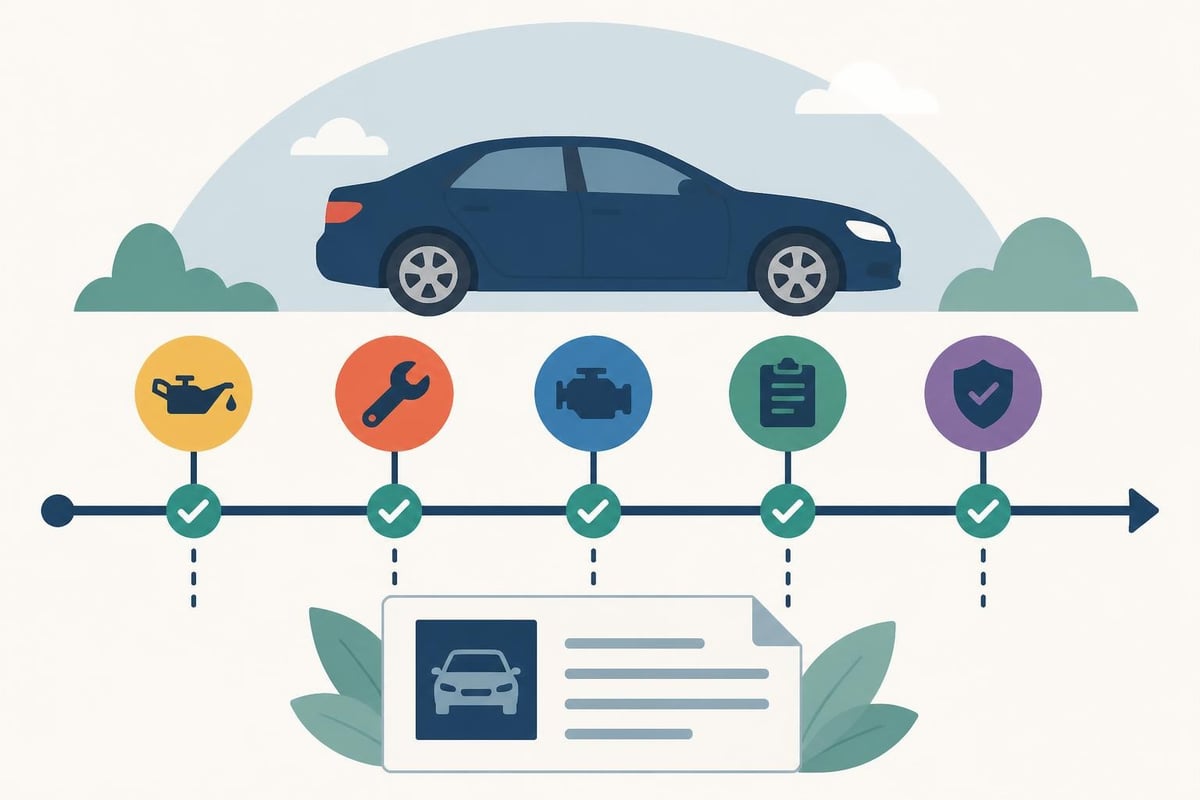
Regular maintenance creates a predictable pattern. Oil changes every 5,000 miles or six months generate frequent mileage checkpoints. Missing records between 60,000 and 90,000 miles might indicate someone avoided creating documentation during a fraud window.
Major services happen at specific intervals: 30,000, 60,000, 90,000, and 120,000 miles. If the service records show the 30,000-mile service, then jump straight to what's labeled as a 60,000-mile service but the mileage interval doesn't match, investigate the gap.
Warranty claims require dealers to document mileage accurately because manufacturers audit these records. A vehicle with several warranty repairs in its history has solid mileage verification from an authoritative source.
Private party versus dealer purchases
Buying from a private seller gives you less legal protection than dealer purchases in most states. Dealers must comply with used car rules, provide certain disclosures, and can lose their license for odometer fraud.
Private sellers face fewer formal requirements, though federal odometer law still applies to anyone transferring a title. Practically speaking, pursuing legal action against a private seller costs more and takes longer than against a licensed dealer.
This risk difference makes the carfax mileage check even more valuable for private transactions. You're doing your own due diligence without the protections a dealer sale provides.
"As-is" sales and mileage fraud
Many states allow private "as-is" sales with no warranty, but "as-is" doesn't protect a seller who commits fraud. Misrepresenting mileage is fraud, period. The as-is designation covers mechanical condition and normal wear, not deliberate deception about facts.
If you buy as-is and the transmission fails the next week, you own that problem. If you buy as-is and discover the seller rolled back the odometer, you have grounds to cancel the sale despite the as-is agreement.
Regional and market considerations
Certain markets see higher fraud rates than others. Border areas where vehicles move between countries, port cities with export markets, and regions with weak inspection requirements attract bad actors.
Luxury vehicles and trucks suffer disproportionate fraud because their high values make the effort worthwhile. A 30,000-mile rollback on a $60,000 truck might add $8,000 to $12,000 in sale price. The same rollback on a $6,000 economy car barely moves the needle.
Fleet and lease vehicle history
Former fleet vehicles, rental cars, and lease returns have thorough mileage documentation because corporations track everything. If you're examining one of these vehicles, the history should show consistent mileage reporting throughout its service life.
Gaps in fleet vehicle records are extremely suspicious because these operations document every detail for tax, maintenance, and resale purposes. A fleet vehicle with sparse history probably isn't actually a fleet vehicle, or someone is hiding part of its history.
Making the final decision
Even with a clean carfax mileage check, good service records, and physical inspection that matches, trust your instincts. If something feels wrong about the deal, walk away.
Too-good-to-be-true pricing combined with a seller who's pushing for a quick sale without much negotiation might indicate they want to complete the transaction before you discover problems.
Pressure to skip a pre-purchase inspection or reluctance to let you take the vehicle to your mechanic are massive red flags for any used car purchase, not just mileage concerns.
Final verification steps:
- Run the complete vehicle history report and read it thoroughly
- Have your mechanic inspect the vehicle and scan all computer modules
- Verify the VIN on the dashboard matches the title, door jamb sticker, and under-hood identification
- Cross-reference service records against the history report timeline
- Compare asking price to market value for the actual condition and mileage
Remember that you're making a significant financial decision. Taking an extra day or two to verify mileage thoroughly protects you from years of regret and potential financial loss. The small cost of a comprehensive vehicle history report pays for itself many times over if it reveals fraud or simply confirms you're getting what the seller claims.
A carfax mileage check is your first and best defense against odometer fraud, revealing the documented history that physical inspection alone can't provide. Whether you're buying from a dealer or private seller, verifying mileage protects both your immediate investment and long-term ownership costs. Carfax Vin Check delivers full Carfax vehicle history reports with complete odometer records starting at just $3.50 per report, with credits that never expire and automatic refunds if a report can't be produced. Get the facts before you buy.
Check the car before you buy it
The full Carfax report for $7.99, or $3.50 each in a 20-pack.